How to Tell if Your Child Has Bronchitis or Pneumonia
Your child started with a simple cough, but now the fever will not go away. Sound familiar? Bronchitis and pneumonia are two of the most common respiratory illnesses in children, and they can look remarkably similar in the early days. Both often follow a cold or viral infection, which makes telling them apart genuinely difficult for parents.
However, knowing the difference matters because each condition may need a different level of care. In this blog, you will learn the key symptoms, warning signs, and exactly when to bring your child to All Kidz Urgent Care for a same-day respiratory evaluation.
What’s the Difference Between Bronchitis and Pneumonia?
Both bronchitis and pneumonia are respiratory illnesses that affect children, but they involve different parts of the airway. Bronchitis occurs when the bronchial tubes, which carry air to and from the lungs, become inflamed and irritated. Pneumonia, on the other hand, is an infection that develops inside the lung tissue itself. Both conditions can follow a cold or viral illness in children, which is why parents often cannot tell them apart at first. While the symptoms can overlap, there are a few important clues parents should watch for.
What Bronchitis Usually Looks Like
Bronchitis in kids often begins with a wet, mucus-producing cough that lingers well beyond a typical cold. A mild fever, general fatigue, and chest discomfort are also common during the early days of the illness. The child cough associated with bronchitis tends to sound loose and productive rather than dry. Most children with bronchitis gradually improve over one to two weeks as the airway inflammation settles down. Symptoms moving in the right direction over time are a reassuring sign with this condition.
Signs That May Point to Pneumonia
Pneumonia symptoms in children are often more severe than bronchitis symptoms, especially when breathing becomes affected. If your child’s cough is getting worse instead of improving, watch for signs that may suggest the infection has moved deeper into the lungs.
Some common signs of pneumonia in children include:
- High fever that develops quickly or does not go away
- Fast or difficult breathing
- Chest pain while breathing or coughing
- Extreme tiredness or low energy
- Persistent cough that worsens over time
- Wheezing or noisy breathing
- Loss of appetite or dehydration
If your child has several of these symptoms together, it may be time for a prompt medical evaluation.
Can Bronchitis Turn Into Pneumonia?
In some cases, child bronchitis can progress into pneumonia if the initial infection worsens or a secondary bacterial infection develops. Children with weakened immune systems, asthma, or other underlying conditions face a higher risk of this progression. A worsening cough in children that intensifies instead of gradually improving is one of the clearest signals that the illness may be advancing. Monitoring symptoms closely and seeking evaluation when things are not improving is the most important thing parents can do.
Symptoms Parents Should Never Ignore
Some respiratory symptoms in children go beyond what rest and fluids at home can address. If your child’s cough is getting worse instead of better, these warning signs deserve attention.
- Trouble breathing or any noticeable effort required with each breath during rest or normal activity
- Rapid breathing that seems faster than usual and does not slow when your child is calm and resting
- Lips looking blue or pale which signals a potential drop in oxygen levels and needs immediate care
- Fever lasting more than three to five days without signs of improvement despite rest and appropriate fluids
- Unusual sleepiness where your child is harder to wake or much less alert and interactive than normal
- Dehydration indicated by dry lips, reduced urination, or a child who is refusing to drink adequately
- Chest pain that your child mentions or shows through guarding, shallow breathing, or reluctance to move
- Wheezing or a high-pitched sound during breathing that suggests airway narrowing or significant inflammation
- Cough lasting more than two weeks with no clear improvement in frequency, intensity, or your child’s overall energy
How Doctors Diagnose Bronchitis vs Pneumonia
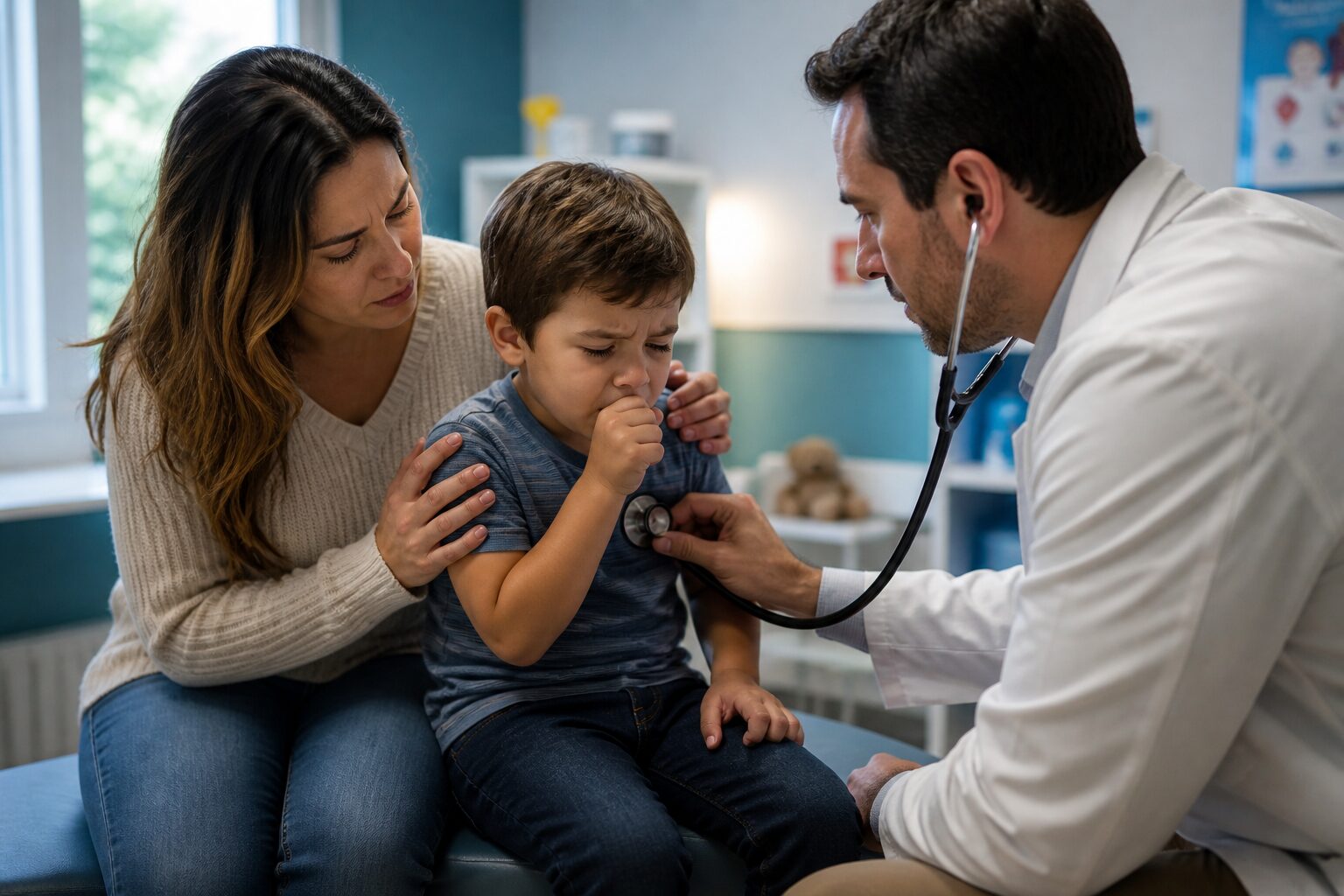
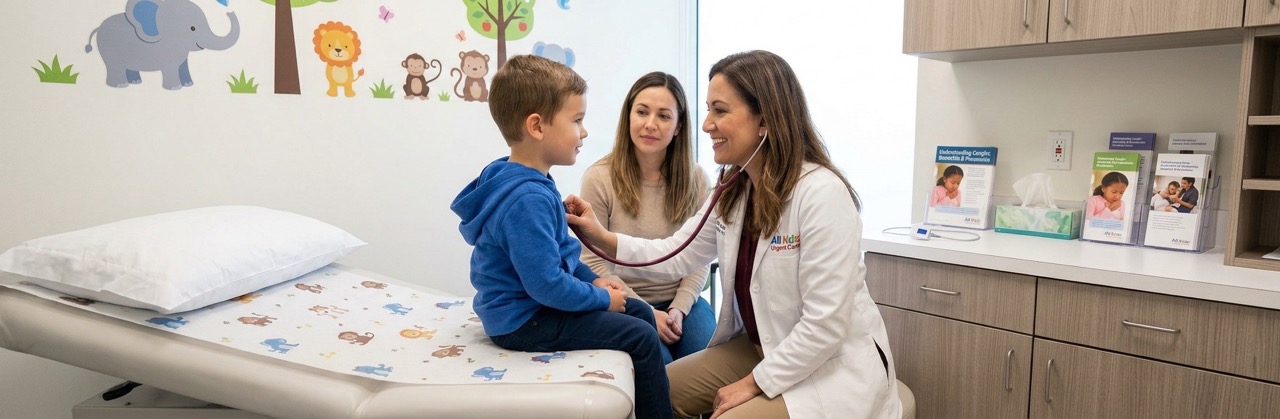
Diagnosing bronchitis or pneumonia requires more than just listening to a description of symptoms. A pediatric provider will listen carefully to your child’s lungs using a stethoscope to detect crackling, wheezing, or reduced airflow. Oxygen levels are checked quickly and non-invasively using a small device placed on the finger. The provider will also review your child’s full symptom history, including how long the cough has been present and how it has changed.
If pneumonia is suspected, a chest X-ray may be recommended to confirm what is happening inside the lungs. At All Kidz Urgent Care in Torrance, we provide same-day respiratory evaluation to help families get clear answers without the long wait of a hospital emergency room.
Treatment for Bronchitis and Pneumonia in Kids
Treatment depends heavily on whether the illness is viral or bacterial in origin. Bronchitis is most often caused by a virus, which means antibiotics are not effective and the body needs time to recover. Bacterial pneumonia, however, may require a course of antibiotics prescribed by a pediatric provider after proper evaluation.
Rest and consistent hydration support recovery for both conditions and should be prioritized from the start. A lingering cough after the main illness passes is common and does not always mean the child is still sick. The good news? Most children recover well when they receive the right care early.
Home Care Tips for Parents
- Encourage fluids throughout the day to keep airways moist and support the body’s natural recovery process
- Use a humidifier in your child’s room to add moisture to the air and ease nighttime coughing
- Monitor fever closely and note any changes in temperature patterns over consecutive days of illness
- Avoid smoke exposure of any kind, including secondhand smoke, which significantly worsens respiratory symptoms in children
- Let kids rest as much as they need, since sleep is one of the most powerful tools for recovery
When Antibiotics May Be Needed
Bacterial pneumonia and walking pneumonia are two conditions where antibiotics play an important role in recovery. Walking pneumonia is a milder form that allows children to remain somewhat active while still feeling unwell. However, starting antibiotics without a proper medical evaluation is never the right approach. A pediatric provider needs to assess the symptoms, listen to the lungs, and determine the most appropriate course of action for your child’s specific situation.
When to Visit Urgent Care for Your Child’s Cough
A persistent cough that does not improve after a week, a fever that keeps returning, or a child who seems significantly more tired than usual are all reasons to seek a same-day pediatric evaluation. Breathing concerns should never be managed at home alone, particularly in younger children who cannot clearly describe how they feel. Worsening symptoms after what seemed like a simple cold are a reliable signal that something more than a virus may be at play.
At All Kidz Urgent Care in Torrance, we provide comprehensive evaluations for children with respiratory symptoms, including bronchitis, pneumonia, wheezing, and persistent coughs. Our experienced pediatric team is here to give your child the focused attention they need and give you the clarity you deserve.
A Cough That Keeps Getting Worse Deserves More Than Waiting
Pediatric respiratory illness can change quickly, and acting early always leads to better outcomes for your child. Whether it turns out to be bronchitis or pneumonia, getting an accurate evaluation removes the guesswork and points your family in the right direction.
Do not let a persistent cough in kids go unexamined when a same-day visit can bring you real answers. Trust your instincts, watch the symptoms, and bring your child in when something does not feel right.
Visit us at: 2927 Rolling Hills Road, Torrance, CA 90505
Call us: +1 310-292-0054
Email: contactus@allkidzurgentcare.com