
Does My Child Need Stitches? 7 Signs It’s Time for Urgent Care
In 2026, pediatric urgent care visits for cuts and lacerations continue to rank among the most common reasons South Bay families seek same-day care. California‘s active outdoor culture means children are running, climbing, biking, and playing year-round. Cuts happen. Most are minor. But some need more than a bandage and a calm voice. The hardest part for any parent is knowing which situation they are facing in that first panicked moment after an injury. This blog walks you through seven clear signs that your child needs stitches, so you can act with confidence when it matters most.
Why Getting This Decision Right Matters
A wound that needs stitches but does not receive them carries real consequences. Leaving a significant cut to close on its own increases the risk of infection, delayed healing, and permanent scarring. The window for effective stitching is also time-sensitive. Most wounds are best closed within six to eight hours of the injury occurring. Waiting too long or guessing wrong can turn a manageable laceration into a more complicated problem. Understanding the signs helps you make the right call quickly and get your child the care they need before that window closes.
7 Signs Your Child May Need Stitches
Parents often describe the same uncertainty in the moment of injury: blood, a crying child, and no clear answer on what to do next. These seven signs give you a framework for making that decision clearly and calmly. Here is what to look for before you decide whether to treat at home or head to pediatric urgent care.
Sign 1: The Cut Is Deep or You Can See Tissue Beneath the Skin
A wound that only affects the outermost layer of skin is a surface cut. It hurts and it bleeds, but it typically heals well without closure. A cut that goes deeper tells a different story. If you can see yellowish fatty tissue, muscle, or anything other than skin inside the wound, the laceration has penetrated below the surface layer. These wounds cannot close properly on their own. The skin edges pull apart with movement, leaving the deeper tissue exposed and vulnerable to infection. This is one of the clearest indicators that your child needs stitches, and it should prompt a same-day visit without waiting to see how the wound behaves over the next few hours.
Sign 2: Bleeding Does Not Stop After 10 Minutes of Steady Pressure
Most cuts in children slow and stop within a few minutes of consistent, firm pressure applied with a clean cloth. If you have held steady pressure for a full ten minutes and the wound is still bleeding actively, the cut is likely deeper or wider than surface wounds that self-resolve. Do not repeatedly lift the cloth to check, as this disrupts the clotting process and restarts the bleeding cycle. If blood soaks through multiple layers of cloth during that window, that is a clear signal that the wound needs professional evaluation. Head to pediatric urgent care for laceration assessment rather than continuing to manage at home.
Sign 3: The Wound Edges Are Gaping or Will Not Stay Closed
A wound that closes naturally when the surrounding skin is at rest is less likely to need stitches. A wound where the edges pull apart and cannot stay together is a wound that needs external closure. Gaping is one of the most reliable signs that a child needs stitches because the body cannot bridge that gap cleanly on its own. Skin that separates at rest will separate even further with movement, laughter, crying, or normal daily activity. Attempting to hold it shut with butterfly bandages or tape at home works for some minor wounds but is insufficient for a wound with significant gaping. A pediatric provider needs to assess the correct closure method.
Sign 4: The Cut Is on the Face, Lips, Hands, or Over a Joint
Location changes everything in laceration management. Wounds on the face carry a higher risk of noticeable scarring if not properly closed, and the face moves constantly with expression, speech, and eating. Cuts on the lips require especially careful closure because of how the lip border aligns. Wounds over joints like knees, knuckles, and elbows are pulled open with every bend and straighten. Wounds on the hands and fingers involve structures including tendons and nerves that need assessment. Any cut in these locations deserves a same-day pediatric evaluation even if the wound does not look dramatically deep. The stakes for improper healing are higher in these areas than on other body surfaces.
Sign 5: The Injury Was Caused by a Dirty Object, Rusty Metal, or Animal Bite
How the wound happened matters as much as what it looks like. A clean cut from a kitchen knife carries a different infection risk than a puncture from a rusty nail or a tear from a dog bite. Dirty objects introduce bacteria directly into the wound at the moment of injury. Rusty metal raises specific concerns about tetanus exposure, particularly if your child’s vaccination history is not fully up to date. Animal bites create jagged, crushing wounds that are significantly more prone to infection than clean lacerations. All three scenarios warrant same-day pediatric evaluation regardless of how the wound appears on the surface. Understanding how infected cuts develop helps parents recognize why early evaluation after high-risk injuries matters.
Sign 6: The Wound Is Longer Than Half an Inch
Length is not the only measure of a wound’s severity, but it is a practical and easy benchmark to apply in the moment. Wounds longer than approximately half an inch are less likely to close cleanly without assistance. The longer the wound, the wider the gap tends to be, and the more surface area the body needs to bridge during healing. A wound that is long but shallow may close more easily than one that is short but deep. When in doubt, measure by eye and err toward seeking evaluation. A quick assessment by a pediatric provider tells you definitively whether stitches are needed or whether the wound can be managed with careful wound care at home. That clarity is worth the visit.
Sign 7: Signs of Infection Are Already Developing
Most wound infections do not appear on the day of the injury. They develop over the following 24 to 72 hours. But some wounds show early signs of infection faster, particularly those caused by dirty objects or bites. If you notice spreading redness around the wound edges, increasing warmth, swelling that is worsening rather than improving, pus or cloudy discharge, or a bad odor from the wound site, seek pediatric evaluation the same day. A child who also develops fever alongside these local wound signs needs prompt assessment. Infection that is caught early is manageable. Infection that spreads requires a higher level of care and carries greater risk for your child.
Urgent Care or Emergency Room: How to Decide
When your child has a cut, it can be hard to know where to go for treatment. The right choice depends on how serious the injury is and whether it can be safely managed outside the hospital. Many cuts can be treated at a pediatric urgent care clinic. However, some injuries need emergency medical care right away. Use these guidelines to help you decide where to seek care:
Visit Pediatric Urgent Care If:
- Bleeding has stopped or is slowing with pressure.
- Your child is awake, alert, and acting normally.
- The cut may need stitches or wound closure.
- The injury is not life-threatening.
- You want prompt treatment without going to the emergency room.
Go to the Emergency Room If:
- Bleeding does not stop after applying firm pressure.
- Your child loses consciousness or shows signs of shock.
- The cut is very deep or very large.
- The injury involves the neck, chest, or abdomen.
- There is severe damage to muscles, bones, or other deep tissues.
Most childhood cuts and lacerations can be treated safely at a pediatric urgent care center, helping your child receive timely care in a comfortable setting.
Expert Care for Children’s Cuts Starts Here
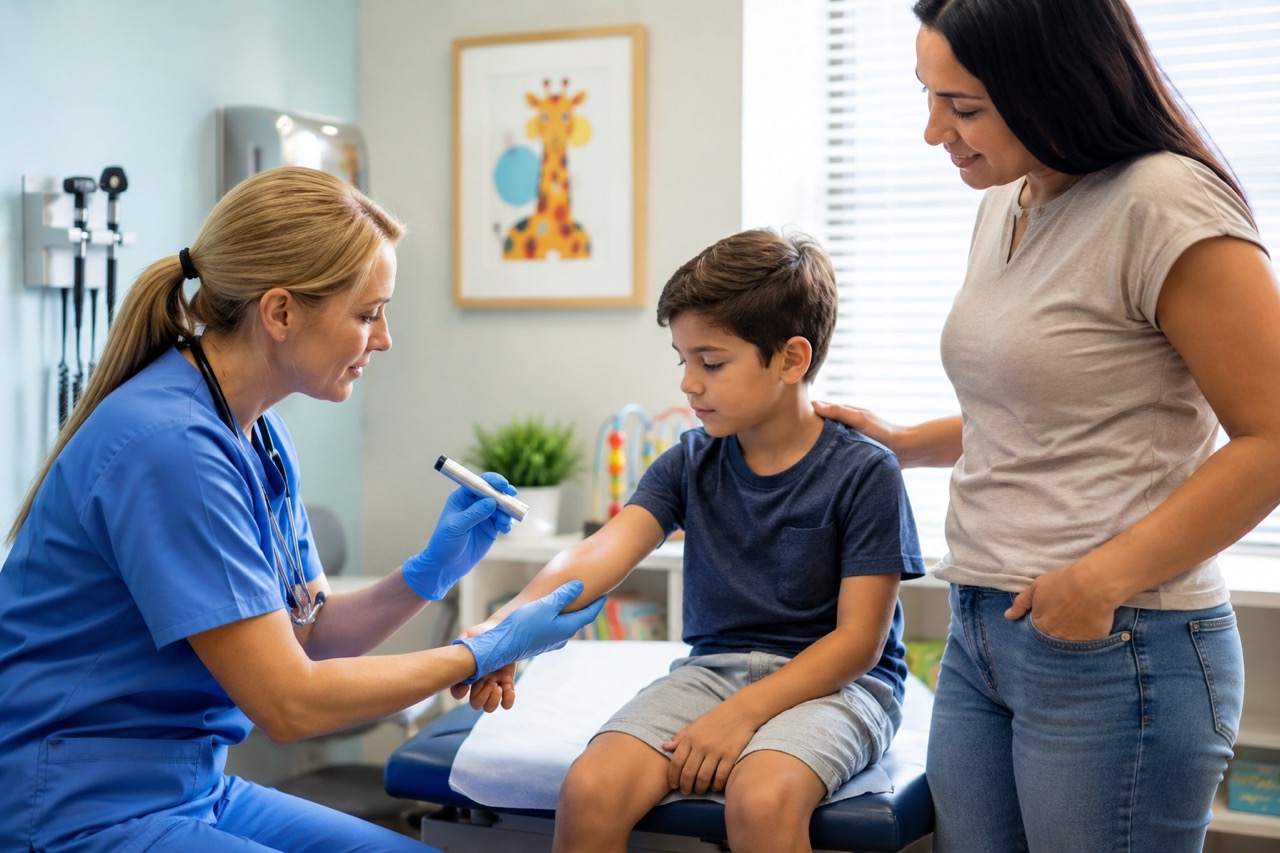
At All Kidz Urgent Care in Torrance, our board-certified pediatric team evaluates and treats lacerations in children of all ages from newborns through young adults. Dr. Sara Dhillon and our experienced providers examine each wound carefully to assess depth, location, contamination risk, and the most appropriate closure method. We prioritize keeping children calm and comfortable throughout the process, and parents are encouraged to stay close during the visit.
We serve families across Torrance, Redondo Beach, Lomita, Palos Verdes, Carson, Gardena, Manhattan Beach, and the wider South Bay community. Walk-ins are welcome during all open hours. No appointment is needed.
Visit us at: 2927 Rolling Hills Road, Torrance, CA 90505
Call us: +1 310-292-0054
Email: contactus@allkidzurgentcare.com