
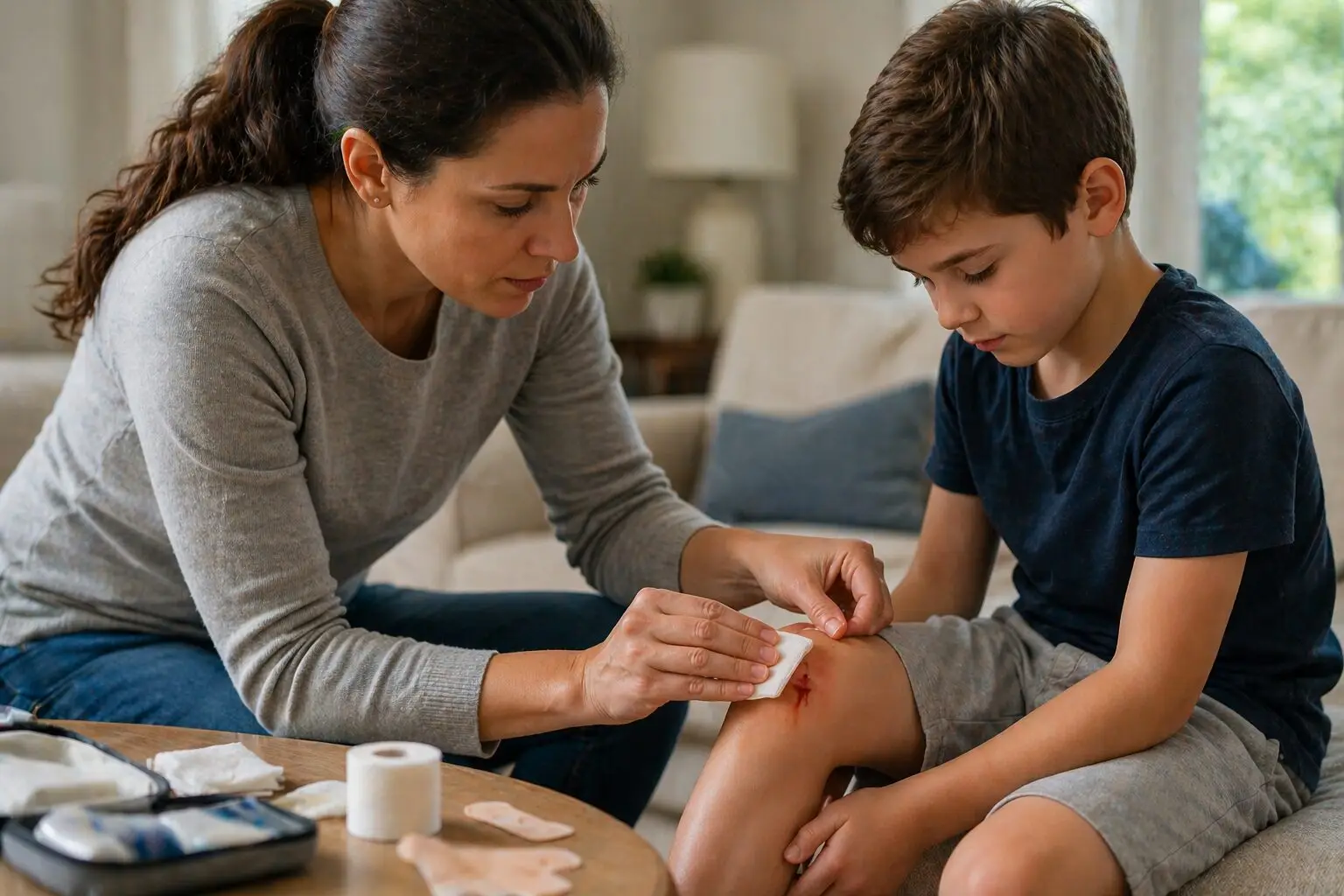
Child Cut Bleeding Control: A Parent’s Simple First Aid Guide
One moment your child is laughing and playing. The next, there is blood and your heart drops. A bleeding cut can happen in seconds and feel overwhelming immediately. Your mind races and you want to do the right thing fast.
The good news is that most cuts in children are manageable at home with a few simple steps.
Staying calm is the first and most important thing you can do. This guide walks you through exactly how to stop bleeding from a cut in children. You will learn what to do first, what to avoid, and when it is time to seek urgent care.
You have got this.
What Should You Do First When a Child Is Bleeding?
The very first step is to stay calm so your child stays calm too. A relaxed parent helps a frightened child feel safer in a scary moment.
Grab the cleanest cloth or bandage available and place it directly over the cut. Apply gentle but steady pressure and do not let go too quickly.
Keep the injured area as still as possible while you maintain pressure. Do not peek under the cloth every few seconds, as this disrupts the clotting process.
Speak to your child in a calm, steady voice throughout. Most minor cuts in children respond well to these simple first steps. Stay focused and take it one step at a time.
Step-by-Step Guide to Stop Bleeding From a Cut in Children
Knowing the right steps before an injury happens makes you a more confident parent in the moment. Each step below builds on the last and helps your child’s body do what it is designed to do.
Follow these steps carefully to stop bleeding from a cut in children safely and effectively.
Apply Gentle Pressure Immediately
Find a clean cloth, gauze pad, or folded bandage and place it directly on the wound. Press down firmly but gently with your hand. Maintain that steady pressure without lifting the cloth to check the cut.
If the cloth soaks through, add more material on top rather than replacing it. Most minor cuts in children will begin to slow within several minutes of consistent pressure. This step alone handles the majority of childhood bleeding cut situations effectively.
Elevate the Injured Area if Possible
Raising the injured area above the level of your child’s heart helps slow blood flow. If the cut is on the hand or arm, gently lift it upward while keeping pressure on.
Leg cuts can be managed by having your child lie down with the leg raised slightly. Keep your child as still and calm as possible during this step.
Movement increases blood flow, which makes it harder for a clot to form. A quiet, settled child heals faster than one who is moving and upset.
Clean Around the Cut Carefully
Once bleeding has slowed, gently rinse the area around the wound with clean, cool water. Remove any visible dirt or debris from the surface of the skin nearby.
Do not scrub directly inside the wound or rub the cut aggressively. Rubbing can reopen the wound and restart the bleeding process.
Use a gentle stream of water rather than a cloth pressed into the cut. Keeping the wound clean reduces the risk of infection as it begins to heal.
Cover the Cut With a Clean Dressing
Once the bleeding has slowed and the area is clean, cover the wound with a fresh bandage. A clean dressing protects the cut from dirt, bacteria, and further irritation. It also helps maintain gentle pressure on the wound as your child moves.
Make sure the bandage is secure but not so tight that it restricts circulation. Change the dressing daily or whenever it becomes wet or dirty. Monitor the wound over the next day or two for any signs of infection.
What Parents Should Avoid When Treating a Bleeding Cut
It is just as important to know what not to do as it is to know the right steps. Some common instincts in these moments can actually make things worse. Here is what to avoid:
- Do not panic or rush because a calm approach keeps your child cooperative and makes treatment more effective
- Avoid using harsh substances like hydrogen peroxide, iodine, or alcohol directly inside the wound, as these damage healing tissue
- Do not remove pressure too early because lifting the cloth before clotting begins will restart the bleeding immediately
- Avoid repeatedly checking the wound by lifting the dressing, as every peek can disturb the clot that is forming
- Do not try to close the wound yourself using tape, glue, or any homemade method if the cut appears deep or gaping
When Bleeding From a Cut May Be Serious
Most cuts in children stop bleeding within a few minutes of steady pressure. But some wounds send a clear signal that home care is not going to be enough. Watch for these signs:
- Bleeding does not stop after several minutes of steady, continuous pressure applied to the wound
- Cut appears deep or wide with skin edges that pull apart and will not stay together naturally
- Blood flows heavily and soaks through multiple layers of cloth or bandaging quickly
- Injury involves the face, hands, or a joint where proper closure is essential for healing and function
- Child feels dizzy or weak which may indicate significant blood loss and requires prompt medical attention
- Visible fat, muscle, or deeper tissue inside the wound, which means the cut goes well below the skin surface
When to Visit Pediatric Urgent Care for a Child’s Cut
Some cuts clearly need more than a bandage and a hug. Recognizing those moments early helps you get your child the right care before things become more complicated. Here are the situations that call for a visit to pediatric urgent care:
Bleeding Continues Despite Pressure
You have held firm pressure for ten minutes or more and the bleeding has not slowed. This is a clear sign that the wound needs professional evaluation.
Do not keep waiting at home in hopes it will stop on its own. Continued bleeding after steady pressure suggests the cut may be deeper than it appears.
A pediatric provider can assess the wound quickly and take the right next steps. Getting there sooner leads to a better outcome for your child.
Cut May Need Stitches
Some cuts simply cannot heal properly without stitches, staples, or medical glue. If the wound edges are pulling apart and will not stay closed naturally, the cut likely needs closure.
Trying to manage a wound that needs stitches at home increases the risk of scarring and infection. A quick visit to pediatric urgent care means a provider assesses the wound properly. Getting the right closure early supports cleaner, faster healing for your child.
Wound Is Deep or Gaping
A deep wound goes beyond the top layer of skin into the tissue beneath. If you can see anything other than skin inside the wound, seek care immediately.
Gaping cuts where the edges separate widely need professional closure to heal correctly. These wounds do not close well on their own and carry a higher infection risk.
Do not attempt to push the wound closed or cover it with tape at home. Prompt pediatric evaluation is the right step for any wound that looks deep or open.
Child Is in Ongoing Pain
Significant or worsening pain after a cut is a signal worth taking seriously. A wound that keeps hurting despite comfort measures may be more serious than it looks.
Pain around the cut that spreads or increases over time can suggest developing complications. A child who cannot settle or is very distressed about the injury needs to be seen.
Pediatric providers are experienced in caring for young patients who are scared and in pain. Your child deserves an evaluation when the discomfort is not improving. At All Kidz Urgent Care in Torrance, we evaluate cuts in a calm, child-friendly setting where your child’s comfort is our priority.
How All Kidz Urgent Care Supports Children With Cuts
At All Kidz Urgent Care, we built our clinic around one simple idea. Children deserve focused, compassionate care in a space designed just for them. Our team understands how frightening a bleeding cut can be for a child and a parent.
We approach every visit with patience, skill, and genuine warmth. Dr. Sara Dhillon leads our experienced pediatric team with a commitment to excellent care. Our mission is to reduce unnecessary emergency room visits for South Bay families.
We offer convenient hours that work for busy parents, including evenings and weekends. Walk-ins are always welcome, so you never have to wait for an appointment in an urgent moment. Your child is safe, seen, and cared for here.
Quick Checklist for Parents
When the moment happens, a simple checklist helps you stay focused and act fast. Keep this in mind the next time your child gets a cut and starts bleeding:
- Stay calm so your child takes their cues from your steady, reassuring presence
- Apply pressure using a clean cloth held firmly and continuously over the wound
- Elevate if possible by raising the injured area above heart level to help slow bleeding
- Cover the wound with a clean dressing once bleeding has slowed to protect and support healing
- Watch for warning signs including heavy bleeding, deep wounds, or a child who seems weak or dizzy
- Seek care if unsure because a quick pediatric evaluation is always better than waiting and wondering
Worried Your Child’s Cut Needs Attention?
Do not sit at home wondering if you made the right call. When a cut does not stop or something feels off, trust that feeling.
All Kidz Urgent Care is here for exactly these moments. Our board-certified pediatric team treats every child with skill and gentleness. You do not need an appointment, and you do not need to be certain.
Just walk in and let us take a look. Your child deserves fast, caring attention, and you deserve peace of mind.
Visit us at: 2927 Rolling Hills Road, Torrance, CA 90505
Call us: +1 310-292-0054
Email: contactus@allkidzurgentcare.com