
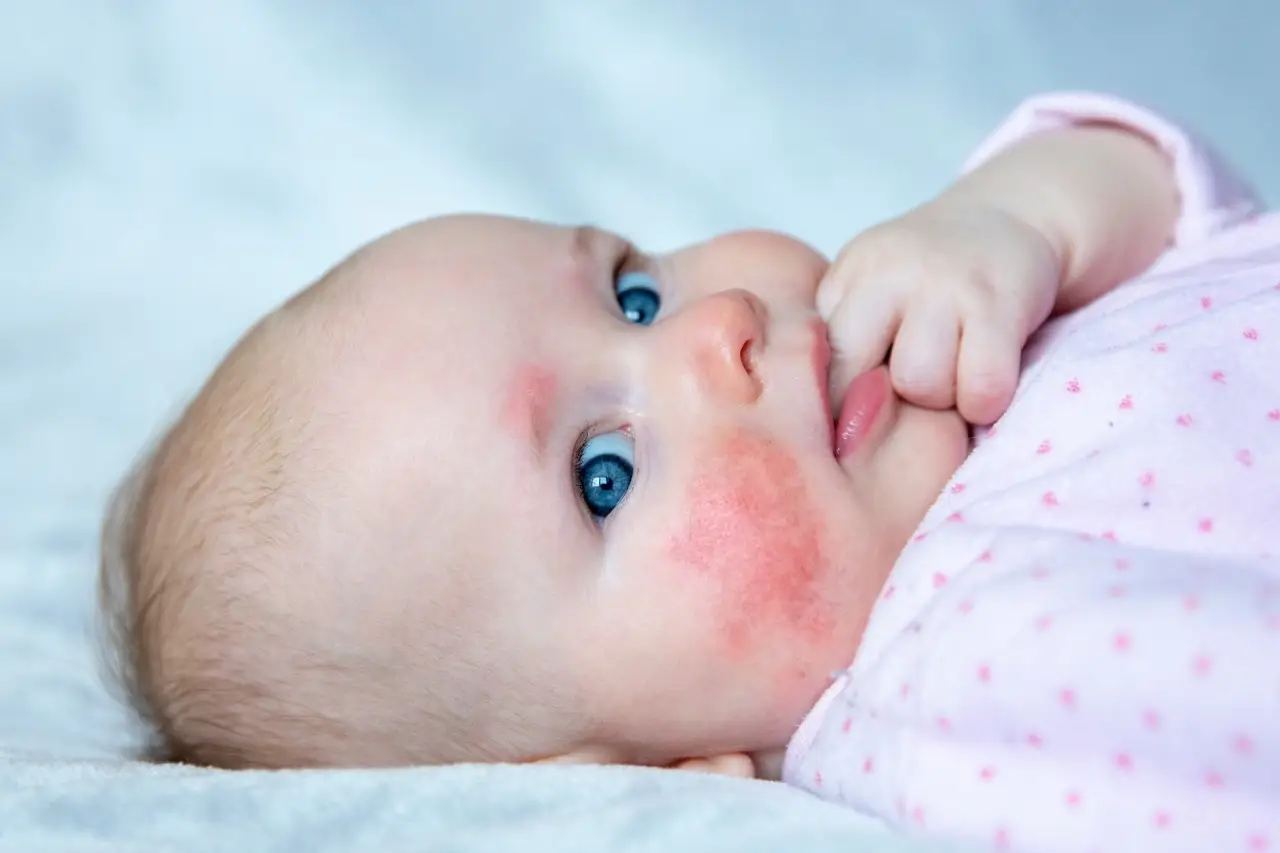
Baby Face Rash Symptoms: Causes, Treatments, and When to Worry
A rash on your baby’s face is one of the most unsettling things a new parent can encounter. The skin looks angry, blotchy, bumpy, or raw, and your instinct is to know immediately whether this is dangerous, whether it will spread, and what you should do about it.
The truth is that baby face rashes are extremely common. Infant skin is thinner, more sensitive, and more reactive than adult skin. It responds to temperature changes, friction, saliva, breast milk, formula, laundry detergent, and even the air itself. Most facial rashes in babies are harmless and resolve on their own. But some are not, and knowing the difference between a normal newborn skin condition and a rash that requires professional evaluation is knowledge every parent deserves to have.
At All Kidz Urgent Care in Torrance, California, our board-certified pediatricians love rashes. Founder Dr. Sara Dhillon has a particular specialty in childhood and infant skin conditions, and our team evaluates baby face rashes every single day. This guide will walk you through the most common causes, what each rash typically looks and feels like, how allergies fit into the picture, and when your baby needs to be seen by a pediatrician.
Why Baby Skin Is So Different
Before diving into specific rashes, it helps to understand why infant facial skin is so prone to reactions in the first place.
Newborn and infant skin has a thinner outer layer, a higher surface area to body weight ratio, and a still-developing skin barrier. The protective acid mantle, the slightly acidic film on the surface of skin that protects against bacteria and environmental irritants, takes weeks to months to fully establish after birth. This means that substances which would barely affect adult skin can trigger visible reactions in a baby.
Babies also produce very little melanin early on, making their skin more reactive to ultraviolet light and temperature. Add in constant drooling, milk contact around the mouth, and the close contact of fabrics, caregivers, and surfaces, and you have every reason for the face to be one of the most commonly affected areas. Understanding this context helps explain why so many different conditions fall under the umbrella of baby face rashes, and why identifying the specific type matters for choosing the right response.
Common Baby Face Rashes: What They Look Like and What Causes Them
Baby face rashes can develop for many reasons, including normal newborn skin changes, irritation, allergies, chronic skin conditions, and viral illnesses. While many facial rashes are harmless and resolve without treatment, others may require medical evaluation. Understanding the most common causes helps parents recognize what is typical, what needs monitoring, and when professional care may be appropriate.
Newborn Skin Changes: Acne, Milia, and Erythema Toxicum
Several harmless skin conditions commonly appear during the first weeks of life. Newborn acne presents as small red or white bumps on the cheeks, nose, and forehead due to lingering maternal hormones that stimulate oil glands. Milia appear as tiny white or yellow cysts caused by trapped skin cells beneath the surface. Erythema toxicum creates blotchy red patches with small white or yellow bumps that may come and go. Although these conditions can look concerning, they are normal newborn skin findings and usually disappear without treatment within weeks or months.
Eczema and Seborrheic Dermatitis
Infantile eczema often develops after two months of age and causes dry, red, itchy, scaly, or sometimes weeping patches on the cheeks, forehead, and scalp. It has strong links to allergies, asthma, and family history. Seborrheic dermatitis, often called cradle cap, may spread from the scalp to the forehead, eyebrows, and the back of the ears. It creates greasy, yellowish scales that usually do not itch. Both conditions benefit from proper skin care, but eczema may require prescription treatment during flare-ups.
Drool Rash and Contact Dermatitis
As babies begin teething, increased saliva can irritate the skin around the mouth, chin, cheeks, and neck. This drool rash often appears as a red, flat, or slightly bumpy area. Contact dermatitis develops when a baby’s skin reacts to lotions, wipes, detergents, fabrics, fragrances, or other products. These rashes usually appear as red, itchy patches in areas that were touched by the trigger. Keeping the skin dry, using gentle products, and avoiding known irritants often helps improve symptoms.
Food Allergies and Facial Hives
Food-related rashes commonly appear when infants begin solid foods or are exposed to ingredients that trigger an allergic response. Hives typically appear as raised, red, itchy welts around the mouth, cheeks, or face shortly after exposure. Some reactions remain mild, while others may involve swelling of the lips, tongue, or throat. Any breathing difficulty, wheezing, or facial swelling alongside a rash requires immediate emergency care. Repeated reactions after specific foods should be discussed with a pediatrician for further evaluation.
Viral Rashes Including Fifth Disease and Hand, Foot, and Mouth Disease
Certain childhood viral illnesses can produce noticeable facial rashes. Fifth disease often causes bright red cheeks that create a “slapped cheek” appearance before a lacy rash develops elsewhere on the body. Hand, foot and mouth disease commonly causes painful mouth sores along with a rash around the mouth, hands, and feet. These illnesses are generally self-limited, but pediatric evaluation helps confirm the diagnosis and rule out other conditions that may require different treatment.
Infant Skin Allergies: Understanding the Connection to Eczema and Food
Infant skin allergies and eczema are closely linked. Research consistently shows that a compromised skin barrier in early infancy, as seen in eczema, may allow environmental allergens to enter the body through the skin and sensitize the immune system. This is part of the reason early eczema is considered a risk factor for developing food allergies and asthma later in childhood.
Parents of babies with persistent or recurrent facial eczema should discuss allergy testing with their pediatrician, particularly if there is a family history of allergic conditions. Managing eczema effectively from early infancy is not just about skin comfort. It may play a role in reducing future allergic sensitization.
Common infant allergens that can manifest as baby face rashes include cow’s milk protein, egg, soy, wheat, peanut, and tree nuts when introduced as solids. In breastfed infants, maternal diet can also be a factor, though this is less predictable and varies significantly between babies.
Baby Face Rashes by Age: What to Expect at Each Stage
Baby face rashes often change as infants grow, feed differently, begin teething, and spend more time around new environments. Some rashes are expected during early development, while others may suggest eczema, irritation, allergy, or infection. Understanding what commonly appears at each age helps parents respond calmly and know when pediatric evaluation may be helpful.
- Newborn (0 to 4 weeks): Milia, erythema toxicum, and newborn acne are all common and expected in this period. These do not require treatment and will resolve naturally.
- 1 to 3 months: Seborrheic dermatitis and early infantile eczema may appear. If your baby has dry, scaly, itchy-appearing patches on the cheeks, a pediatric evaluation is worth pursuing early for proper management guidance.
- 4 to 8 months: Drool rash becomes very common as teething begins. Contact dermatitis from food introduction and food allergy rashes also emerge in this window. This is also a key window for confirming and managing eczema with appropriate treatment.
- 8 months to 2 years: Viral rashes, including fifth disease and hand, foot, and mouth disease, become more prevalent as children enter daycare and group settings. Food allergy rashes may become more apparent as the dietary range expands.
When to Worry: Baby Face Rashes That Require Immediate or Urgent Care
Baby face rashes are usually mild, but certain changes need fast attention. Parents should watch the rash’s color, spread, texture, and related symptoms. Breathing trouble, swelling, fever, infected-looking skin, or a baby who seems unusually weak can signal something more serious. Knowing these warning signs helps families choose urgent care or emergency care quickly.
Go to the emergency room or call 911 if your baby has:
- Swelling of the lips, tongue, throat, or face alongside a rash
- Difficulty breathing, wheezing, or stridor with a rash
- A rash that appears with a high fever, and the baby is extremely unwell
- A purple or dark red rash that does not fade when a glass is pressed against it (this can indicate meningococcal disease, which is a medical emergency)
- Loss of consciousness or extreme limpness alongside any rash
Visit All Kidz Urgent Care promptly if your baby has:
- A facial rash that is spreading rapidly across the body
- A rash with blistering, open sores, or crusting that looks infected
- Hives that are widespread, recurring, or accompanied by swelling
- Eczema that has become raw, weeping, or warm to the touch, suggesting secondary infection
- A rash you cannot identify that is worsening despite home care
- Any rash in a newborn under four weeks that involves fever
- A rash that is significantly affecting your baby’s sleep or feeding due to discomfort
- A drool rash that is cracking, bleeding, or spreading beyond the chin and cheeks
How All Kidz Urgent Care Evaluates Baby Face Rashes
Dr. Sara Dhillon, founder of All Kidz Urgent Care, brings focused experience in infant and childhood rashes to every evaluation. During your baby’s visit, our team examines the rash closely by color, texture, location, spread, and severity.
We also review your baby’s age, feeding routine, recent foods, drool exposure, skin products, wipes, detergents, clothing materials, family allergy history, and any related symptoms such as fever, swelling, itching, drainage, fussiness, or feeding changes. When the rash suggests eczema, irritation, allergy, infection, heat rash, or another concern, All Kidz Urgent Care explains the likely cause in clear language.
Our team provides a practical treatment plan, safe home-care instructions, and specific warning signs to watch for after the visit. If your baby needs specialist follow-up, we can initiate referrals to pediatric dermatologists or allergists in the South Bay area, helping parents leave with confidence instead of continued uncertainty.
Insurance and Payment Information for Baby Rash Evaluations
When your baby develops a facial rash, timely pediatric care is important, and understanding insurance coverage can make the process less stressful. All Kidz Urgent Care works with many major insurance providers, including Blue Shield, Anthem Blue Cross, United Healthcare, Aetna, Cigna, TRICARE, First Health Network, and Health Net. Coverage and out-of-pocket costs can vary depending on your specific plan, deductible, copayment, and network requirements.
Our staff can help review insurance information and explain expected patient responsibilities before treatment whenever possible. Whether your baby needs care for newborn acne, eczema, drool rash, contact dermatitis, food allergy reactions, or another skin condition, we strive to provide clear guidance regarding both medical care and billing.
Families without insurance or those using out-of-network benefits can discuss available self-pay options with our team. Bringing your insurance card and a photo ID to the visit helps streamline the registration process. By providing transparency about coverage and costs, All Kidz Urgent Care allows parents to focus on what matters most: getting prompt answers and appropriate care for their child’s skin concerns.
FAQs about Baby Face Rashes
- Is it normal for a newborn to have a red rash on the face?
Yes. Newborn acne, milia, and erythema toxicum are common in the first days or weeks of life. Most clear without treatment. - How do I tell the difference between eczema and a normal baby rash?
Normal newborn rashes often fade on their own. Eczema usually causes dry, rough, itchy skin that returns often and may need pediatric evaluation. - Can breastfeeding cause a rash on my baby’s face?
Yes. Breast milk contact may cause mild irritation around the mouth. Some foods in a breastfeeding parent’s diet may also trigger rashes in sensitive babies. - When should I stop using a product I think is causing the rash?
Stop using the product right away and switch to fragrance-free, hypoallergenic options. Seek care if the rash worsens or does not improve in a few days. - Does All Kidz Urgent Care treat newborns with facial rashes?
Yes. All Kidz Urgent Care sees newborns through age 21 and can evaluate facial rashes, eczema, irritation, allergy concerns, and infection signs.
Get Expert Pediatric Care for Your Baby’s Rash
When a rash appears on your baby’s face, it can be difficult to know whether it is a common skin condition or something that needs medical attention. If the rash is spreading, causing discomfort, showing signs of infection, or appearing alongside fever, swelling, or feeding changes, do not wait for symptoms to worsen.
All Kidz Urgent Care provides same-day pediatric evaluation for newborns, infants, children, and young adults up to age 21. Dr. Dhillon and our experienced pediatric team can identify the cause of your baby’s rash and create an appropriate treatment plan. Walk-ins are always welcome, and no appointment is required.
Visit Us:
2927 Rolling Hills Road
Torrance, CA 90505
Call Us:
+1 (310) 292-0054
Email Us:
contactus@allkidzurgentcare.com
Get peace of mind today with expert pediatric care from All Kidz Urgent Care.